


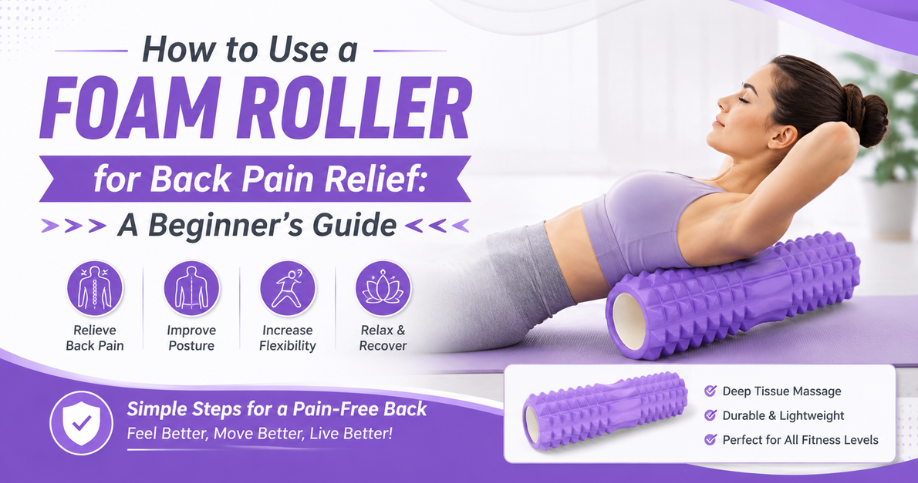
Back pain is one of the most common health concerns affecting people of all ages. Whether you spend long hours sitting at a desk, exercise regularly, or experience muscle tightness from daily activities, discomfort in the back can interfere with your routine. Fortunately, a foam roller for back pain offers a simple, affordable, and effective way to relieve muscle tension and improve mobility from the comfort of your home.
Foam rolling is a self-myofascial release technique that helps relax tight muscles, improve blood circulation, and reduce stiffness. It has become a popular recovery tool among fitness enthusiasts, athletes, office professionals, and anyone looking to maintain better muscle health.
If you're searching for an easy way to relieve muscle tightness, explore the Foam Roller for Back Pain Relief here:
You may also enjoy reading our related home improvement guide:
https://90degreestore.com/blog/creative-ways-to-decorate-your-home-with-a-diya-glass-cover
Let's understand how to use a foam roller safely and effectively.
What Is a Foam Roller?
A foam roller is a cylindrical exercise and recovery tool made from dense foam. It is designed to apply gentle pressure to muscles and connective tissues, helping release tight knots, reduce soreness, and improve flexibility.
Many foam rollers feature textured or spiked surfaces that provide deeper muscle stimulation, making them particularly effective for relieving tension in the back, shoulders, legs, calves, and hips.
People commonly use foam rollers for:
- Muscle recovery after workouts
- Relieving back stiffness
- Improving flexibility
- Increasing blood circulation
- Supporting physical therapy routines
- Daily stretching exercises
Benefits of Using a Foam Roller for Back Pain
Using a foam roller for back pain regularly offers several physical and recovery benefits.
Reduces Muscle Tightness
Tight muscles often contribute to back discomfort. Foam rolling helps release tension and improves muscle relaxation.
Improves Blood Circulation
Rolling increases blood flow to targeted muscles, delivering oxygen and nutrients that support recovery.
Enhances Flexibility
Regular foam rolling improves range of motion and makes stretching exercises more effective.
Supports Better Posture
By reducing tightness in the upper and lower back, foam rolling can help improve posture, especially for people who sit for extended periods.
Speeds Up Muscle Recovery
Athletes and fitness enthusiasts frequently use foam rollers after exercise to reduce soreness and speed recovery.
Relieves Everyday Stress
The gentle massage effect promotes relaxation and reduces muscle fatigue caused by daily activities.
How to Use a Foam Roller for Back Pain
Step 1: Choose a Comfortable Surface
Place your foam roller on a yoga mat or another flat, stable surface.
Wear comfortable clothing that allows free movement.
Step 2: Position the Foam Roller
Sit on the floor and place the foam roller behind your back.
Slowly lean backward until the roller supports the muscles of your upper or middle back.
Avoid placing the roller directly on your neck or lower spine.
Step 3: Cross Your Arms
Cross your arms over your chest or place your hands behind your head for support.
This helps open the shoulder blades, allowing the roller to reach the muscles more effectively.
Step 4: Lift Your Hips
Raise your hips slightly off the floor using your feet.
Use your legs to slowly move your body forward and backward.
Roll gently across the upper and middle back muscles.
Step 5: Pause on Tight Areas
If you find a tender or tight spot, pause for 20–30 seconds without applying excessive pressure.
Allow the muscle to gradually relax before continuing.
Step 6: Repeat Slowly
Continue rolling for 30–60 seconds per muscle group.
Avoid moving too quickly, as slow and controlled movements provide better results.
Best Foam Roller Exercises for Back Pain
Thoracic Spine Roll
Focus on the upper and middle back.
This exercise improves posture and relieves stiffness caused by prolonged sitting.
Upper Back Massage
Roll between the shoulder blades to reduce muscle tension from computer work or lifting.
Lat Muscle Release
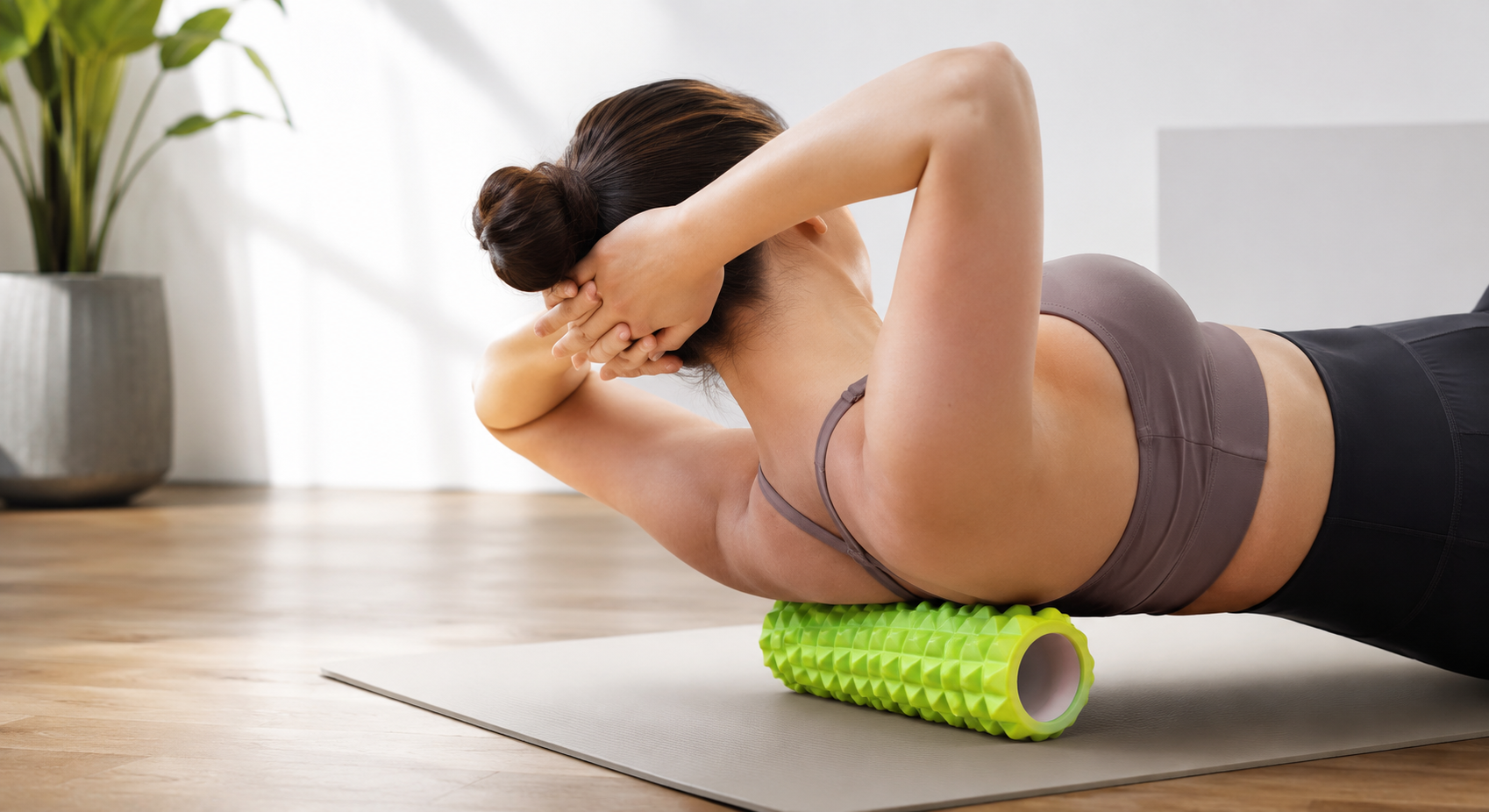
Turn slightly to one side and roll the muscles along the sides of your upper back.
This improves shoulder mobility and flexibility.
Glute Roll
Although not directly on the back, releasing tight glute muscles often reduces lower back discomfort.
Hip Release
Tight hips can contribute to poor posture and lower back pain.
Foam rolling the hips helps restore movement and reduce strain.
Common Mistakes to Avoid
Many beginners make simple mistakes that reduce the effectiveness of foam rolling.
Avoid these habits:
- Rolling too quickly
- Applying excessive pressure
- Rolling directly on the spine
- Holding your breath
- Ignoring pain signals
- Skipping warm-up stretches
- Using poor posture during rolling
Controlled movement is far more effective than aggressive pressure.
Who Can Benefit from a Foam Roller?
A foam roller for back pain is suitable for many different lifestyles.
It is particularly useful for:
- Office professionals
- Students
- Gym enthusiasts
- Yoga practitioners
- Runners
- Cyclists
- Weightlifters
- Senior adults (under professional guidance)
- Individuals with muscle stiffness from daily activities
Regular use helps maintain muscle flexibility and overall mobility.
Tips for Safe Foam Rolling
To get the best results:
- Roll slowly and steadily.
- Breathe normally throughout the exercise.
- Start with gentle pressure.
- Stop if you experience sharp pain.
- Stay hydrated after foam rolling.
- Stretch after each session.
- Use the roller consistently 3–5 times per week.
If you have a serious spinal condition, recent injury, or ongoing medical issue, consult a healthcare professional before beginning foam rolling exercises.
Why Choose a Foam Roller for Home Recovery?
A foam roller is one of the most affordable recovery tools you can own.
Compared to regular massage sessions, it provides long-term value while allowing you to relieve muscle tension whenever needed.
It is:
- Lightweight
- Portable
- Easy to clean
- Suitable for home workouts
- Effective for multiple muscle groups
- Ideal for beginners and experienced users
Whether you're recovering after exercise or simply relieving daily stiffness, a foam roller becomes an essential part of your wellness routine.
If you're looking for a durable option, explore the Foam Roller for Back Pain Relief here:
For more lifestyle and home-related tips, read our previous blog:
https://90degreestore.com/blog/creative-ways-to-decorate-your-home-with-a-diya-glass-cover
Frequently Asked Questions
1. Is a foam roller good for back pain?
Yes. A foam roller for back pain can help reduce muscle tightness, improve circulation, increase flexibility, and relieve soreness when used correctly.
2. How often should I use a foam roller for back pain?
Most people benefit from using a foam roller 3–5 times per week or after exercise. Gentle daily use may also help relieve muscle stiffness.
3. Can beginners use a foam roller?
Absolutely. Beginners should start with light pressure, slow movements, and short sessions before gradually increasing duration.
4. Should I roll directly on my spine?
No. Avoid applying direct pressure to the spine. Instead, focus on the muscles surrounding the spine, including the upper and middle back.
5. How long should a foam rolling session last?
A typical session lasts between 10 and 20 minutes, with 30–60 seconds spent on each muscle group.
6. Can a foam roller improve posture?
Yes. Regular foam rolling helps reduce muscle tightness in the upper back and shoulders, supporting better posture and improved mobility.
7. Is foam rolling safe every day?
For most healthy individuals, gentle foam rolling is safe. However, avoid excessive pressure and consult a healthcare professional if you have chronic pain, spinal injuries, or medical conditions.