


Introduction: Why Is a Brass Ghungroo Ring for Pooja Useful?
Devotional music is an important part of worship in many Indian households and temples. The sound of bells, cymbals, devotional songs and rhythmic clapping creates a spiritual atmosphere during daily prayers, aarti, bhajan and kirtan. Alongside traditional instruments such as manjira and hand bells, small finger cymbals can help devotees maintain rhythm while singing.
A brass ghungroo ring for pooja is a traditional-style devotional accessory designed to produce a rhythmic sound when moved or tapped during worship. Depending on its design, it may feature small metal bells or cymbal-like elements that create sound during devotional activities.
This accessory can be useful for people who regularly participate in bhajan gatherings, temple prayers, satsang and home aarti. Its compact design makes it convenient to handle, carry and store with other pooja essentials.
Whether you are arranging a home temple, preparing for a religious gathering or looking for a traditional musical accessory, understanding the uses of a ghungroo ring can help you choose one that suits your devotional routine.
What Is a Brass Ghungroo Ring for Pooja?
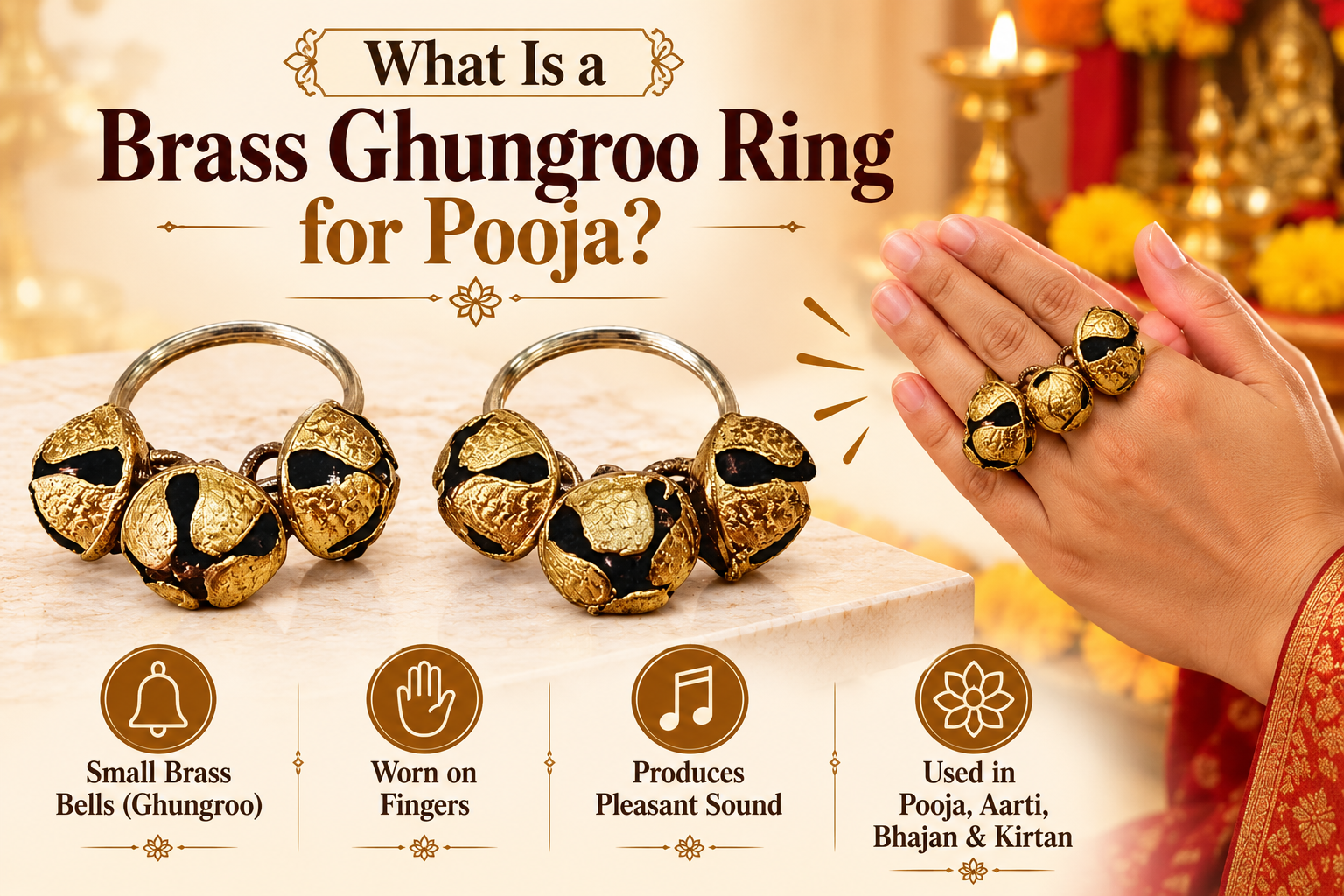
Understanding the Ghungroo Ring
A ghungroo is traditionally associated with small bells that produce sound through movement. Ghungroo-style devotional accessories are used in different cultural and musical settings, depending on their construction and intended purpose.
A finger-held pooja ring or ghungroo kadi is a compact accessory that helps create rhythmic sounds during devotional singing. Some designs use small bells, while others have metal components that produce a cymbal-like sound.
The exact sound and playing method depend on the product's design. It is therefore helpful to check the product images and specifications before purchasing.
Why Is It Used During Worship?
Rhythm plays an important role in group singing and devotional music. A small hand-held musical accessory can help devotees keep time while singing prayers or accompanying an aarti.
A ghungroo ring can also be convenient when you want to participate in devotional singing without carrying a larger musical instrument.
Brass and Traditional Musical Accessories
Brass is commonly used in traditional Indian religious and musical accessories. Its distinctive metallic appearance makes it a familiar material in many pooja settings.
However, the material and finish of a specific product should always be verified through its product description. Do not assume that every gold-coloured or brass-style accessory is made entirely from brass.
Uses of a Brass Ghungroo Ring During Aarti
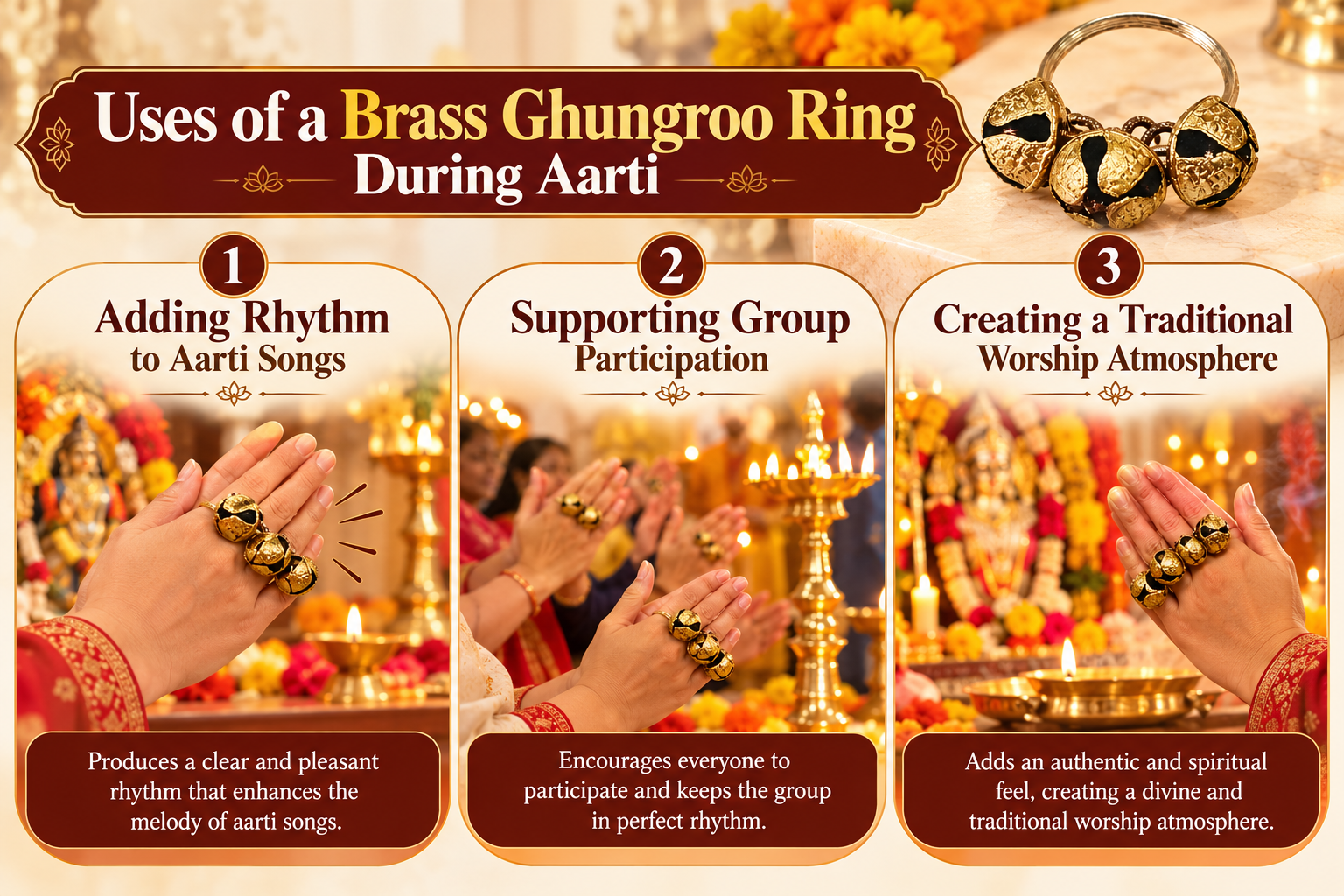
Aarti is a devotional ritual in which a lamp is moved before a deity while prayers or devotional songs are recited or sung. Bells and other small instruments are often used to accompany this ritual.
1. Adding Rhythm to Aarti Songs
During aarti, devotees commonly sing familiar devotional hymns together. A small rhythmic accessory can help maintain a steady beat and make group participation easier.
A ghungroo ring may be used to create accompanying sounds while singing, depending on its design and playing technique.
2. Supporting Group Participation
In a family or community aarti, several people may sing and clap together. A compact musical accessory offers another way to participate in the devotional rhythm.
It is especially useful when the group does not have access to larger instruments.
3. Creating a Traditional Worship Atmosphere
The sounds of devotional instruments are often associated with temple worship and religious celebrations. A ghungroo ring can complement other accessories used during aarti, including bells, diyas and pooja thalis.
Use it at a comfortable volume so that the sound complements the prayer rather than overwhelming the singing.
How a Ghungroo Ring Can Be Used During Bhajan
Bhajan is a form of devotional singing in which participants express devotion through religious songs and prayers. Bhajans may be performed at home, in temples, during satsang or at community gatherings.
Maintaining a Steady Beat
Keeping a steady rhythm helps a group sing together. A small percussion accessory can provide a simple beat without requiring advanced musical training.
The ghungroo ring can be used according to its design to accompany familiar devotional songs.
Accompanying Group Singing
During a bhajan session, participants may use hand clapping, manjira, dholak, harmonium or other instruments. A finger-held accessory can be another option for adding rhythmic accompaniment.
Its compact size can make it convenient for informal gatherings and personal devotional practice.
Supporting Daily Devotional Practice
People who sing bhajans at home may prefer keeping small musical accessories alongside their prayer books and other pooja essentials.
A ghungroo ring can be stored in a dedicated drawer or pooja box so it is readily available during prayer time.
The Role of a Brass Ghungroo Ring in Kirtan
Kirtan is a devotional singing tradition that often involves repeated chants, musical accompaniment and group participation. Depending on the tradition, it may be performed in temples, community halls, religious gatherings and homes.
Encouraging Collective Singing
Kirtan frequently involves participants singing together in a repeating rhythm. Small percussion instruments can help maintain timing and create a coordinated musical atmosphere.
A ghungroo ring may provide additional rhythmic sound when used appropriately with the other instruments.
Accompanying Repeated Chants
Repeated chants benefit from a steady beat. A suitable hand-held percussion accessory can help participants follow the rhythm while focusing on the devotional words.
Convenient for Religious Gatherings
A compact accessory is easy to carry to satsang, bhajan mandalis and other devotional gatherings. Before using it in a group, become familiar with its sound and playing technique to ensure it blends well with the music.
Brass Ghungroo Ring vs. Other Pooja Musical Accessories
Different devotional accessories create different sounds and serve different purposes. Understanding the differences can help you select the right instrument for your needs.
Ghungroo Ring
A ghungroo ring is a compact accessory intended to create rhythmic sounds through movement or playing. The exact sound depends on its construction.
Manjira
Manjira are small metal cymbals that are struck together to produce a bright, ringing sound. They are commonly used in bhajan, kirtan and other devotional music.
Hand Bell
A hand bell produces a clear ringing sound and is often used during aarti and other worship rituals.
Kartal
Kartal refers to a family of hand-held percussion instruments used to maintain rhythm in devotional and folk music. Their construction varies across regional traditions.
Choose an accessory according to the sound you prefer, the type of devotional music you practise and how comfortable it feels to handle.
How to Choose the Right Brass Ghungroo Ring for Pooja
Before purchasing a brass ghungroo ring for pooja, consider its design, ease of use and intended purpose.
Check the Design and Construction
Look closely at the product images to understand how the accessory is held and how its sound-producing elements are arranged.
If you are looking for finger-held cymbals rather than a bell-style accessory, confirm that the product matches your preferred design.
Consider Comfort and Handling
Since the accessory may be used during extended devotional sessions, it should be comfortable to hold and operate.
Check its size and shape, and ensure that it can be handled securely without causing discomfort.
Check the Pack Quantity
Some devotional accessories are sold as a pair or set. Review the product listing carefully to confirm how many pieces are included.
Choose According to Your Musical Needs
Think about whether you mainly want to accompany daily aarti, participate in bhajan sessions or use the accessory during kirtan gatherings.
Choose an instrument whose sound and playing method suit the activity.
Tips for Using a Ghungroo Ring During Daily Pooja
Start with a Simple Rhythm
If you are new to using a devotional percussion accessory, start slowly. Follow the pace of the prayer or song and gradually become comfortable with the rhythm.
Coordinate with Other Instruments
If other people are playing manjira, bells or drums, listen to the overall rhythm. Use your accessory in a way that supports the group rather than competing with the other sounds.
Handle It Carefully
Follow the product's intended method of use. Avoid pulling or bending any attached components, as this may affect the accessory's construction.
Store It with Your Pooja Essentials
Keep the accessory in a clean, dry place after use. A small storage box or dedicated section in your pooja cabinet can help prevent it from becoming misplaced or scratched.
How to Care for a Brass Ghungroo Ring
Proper care can help preserve the appearance and usability of your devotional accessory.
Wipe It After Use
Use a soft cloth to remove dust, fingerprints and residue. If the product has a special finish, follow the seller's cleaning instructions.
Avoid Harsh Chemicals
Strong cleaning agents and abrasive scrubbers can damage decorative finishes. Use gentle cleaning methods suitable for the material.
Store in a Dry Place
Keep the accessory away from prolonged moisture. Dry storage helps maintain its condition and reduces the risk of surface deterioration.
Inspect It Regularly
Check for loose parts or damage before use. If the accessory has small bells or attached metal components, handle it carefully to avoid damaging them.
Explore the Ghungroo Kadi for Pooja at 90 Degree Store
If you are looking for a compact musical accessory for devotional singing, explore the Ghungroo Kadi Finger Cymbals for Pooja, Aarti and Bhajan at 90 Degree Store.
The product listing describes a finger-held musical accessory intended for pooja, aarti, bhajan and devotional use. Check the product images, material details, design and pack quantity before ordering to ensure it meets your needs.
Keep it with your other devotional accessories so it is easy to find during daily prayer and religious gatherings.
Related Reading: Coin Kalash for Diwali Puja
Traditional pooja accessories can help make festive worship arrangements more meaningful. If you are preparing for Diwali or exploring other traditional religious items, read our guide to the Coin Kalash for Diwali Puja: Meaning, Significance and Traditional Uses.
This related article explains the symbolism of the coin kalash, its traditional association with Lakshmi-Kuber worship, decorative uses and gifting ideas. It can help you discover more pooja accessories for your home temple and festive preparations.
Frequently Asked Questions About Brass Ghungroo Ring for Pooja
1. What is a brass ghungroo ring used for in pooja?
A ghungroo ring or similar finger-held musical accessory can be used to accompany devotional singing during aarti, bhajan and kirtan. Its exact use depends on the product's design.
2. Can I use a ghungroo ring during aarti?
Yes, a suitable finger-held musical accessory can accompany aarti songs and help maintain rhythm. Use it according to its design and your family's worship practices.
3. Is a ghungroo ring useful for bhajan and kirtan?
It can be useful for adding rhythmic accompaniment to bhajan and kirtan, particularly in informal home gatherings and group devotional singing.
4. What is the difference between a ghungroo ring and manjira?
Manjira are small metal cymbals that are struck together. A ghungroo ring may use bells or cymbal-like components, depending on its design. Check the product details to understand the instrument's construction.
5. Is a brass ghungroo ring suitable for beginners?
A simple hand-held percussion accessory may be suitable for beginners who want to follow a basic rhythm during devotional singing. Start slowly and practise with familiar songs.
6. Can I carry a ghungroo ring to a temple or satsang?
A compact accessory can be convenient to carry, but check the rules of the temple or gathering before using a musical instrument there.
7. How should I clean a ghungroo ring?
Wipe it with a soft cloth and follow the care instructions for its material and finish. Avoid abrasive cleaners that could damage the surface.
8. What should I check before buying a ghungroo ring for pooja?
Check the design, material, size, comfort, intended use and pack quantity. Make sure the accessory matches the type of sound and playing method you want.
Add Rhythm to Your Devotional Practice
A brass ghungroo ring for pooja can be a practical addition to your collection of devotional accessories. When used appropriately, a small musical instrument can help accompany aarti, bhajan and kirtan while supporting a steady rhythm during prayer.
Choose an accessory that suits your preferred style of worship, handle it carefully and store it with your pooja essentials. Whether you sing at home or participate in group devotional gatherings, the right musical accessory can make your practice more organized and enjoyable.